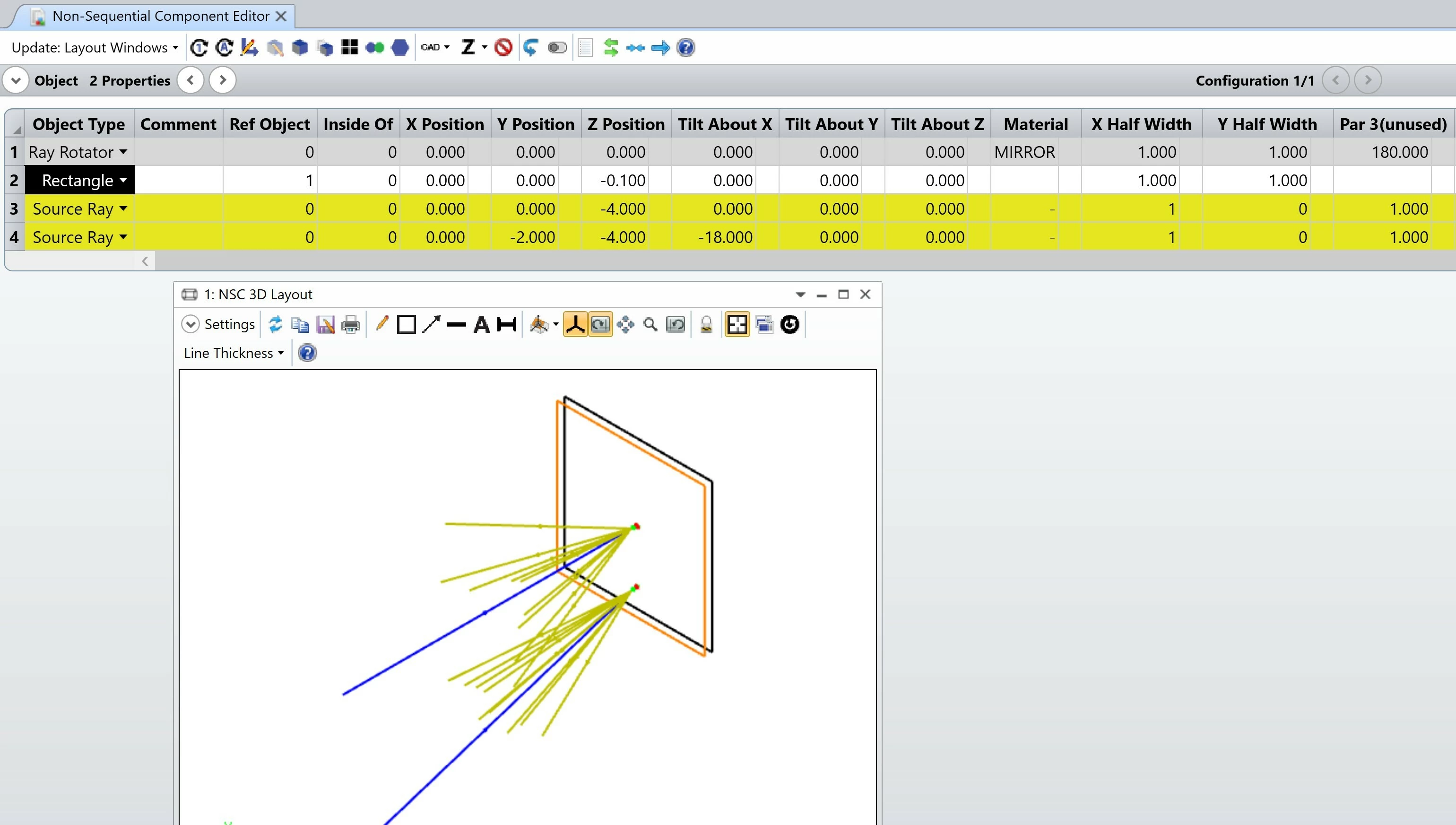

Hello,
I need to model an imperfect retroreflector, such as those found on safety jackets or road signs, as shown in the picture below. I would like the retroreflection to be within a cone of angles ranging from 2 to 10 degrees from the source.
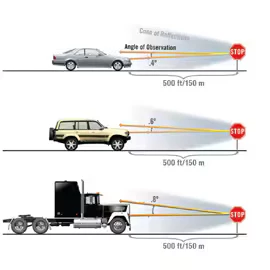
In Sequential mode, I discovered that we can add a retroreflector surface, but the beam still only reflects from the original source. I tried changing the scattering surface, but even when I used a Lambertian, Gaussian, ABg or BSDF and set the Scatter Fraction to 1, it still didn’t work. The rays still go back to where they came from.
In Non-Sequential mode, I managed to add a Lambertian, Gaussian or BSDF in the Scatter Model panel, but when I give an angle to the surface, there is still a specular (BRDF) effect. There is something to change here but I don’t know what nor how.
Is there a way to simulate such backscattering or retroreflection?
Thank you for you help